Publisher/Manufacturer : Studio Formafantasma; experimental studio production
Production period : 2010's
Circa : 2010
Country of production : The Netherlands
Special features : Ensembles from Autarchy are held in the collections of the Mint Museum in Charlotte and the Stedelijk Museum Amsterdam
COL FF 01
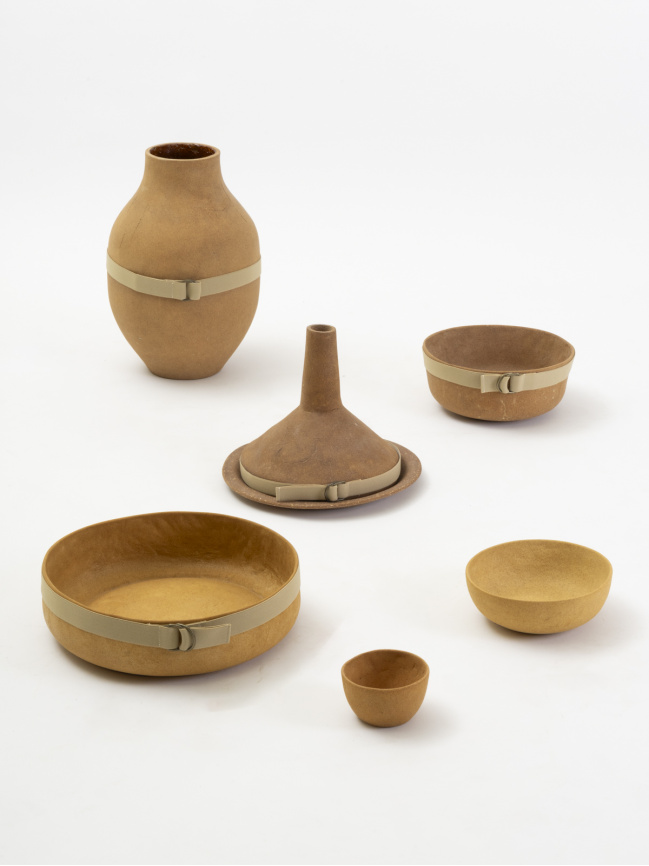
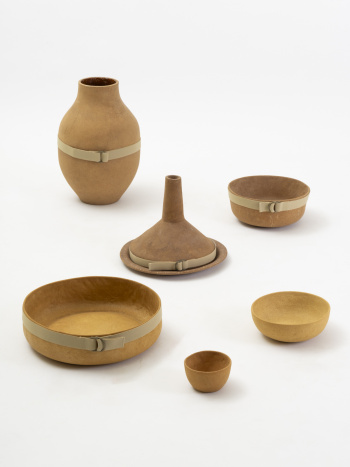
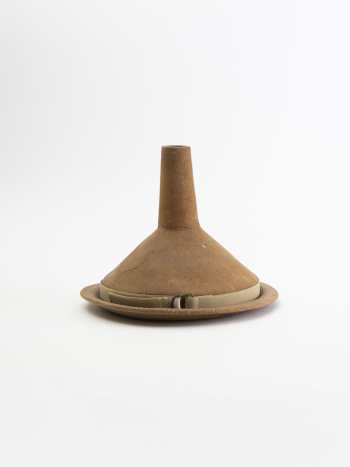
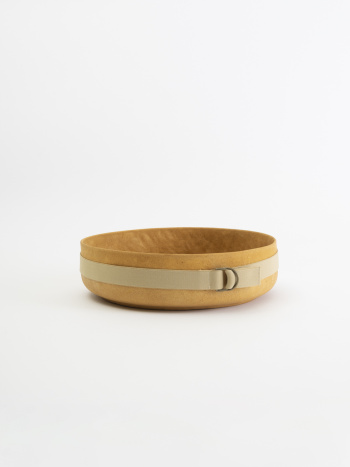
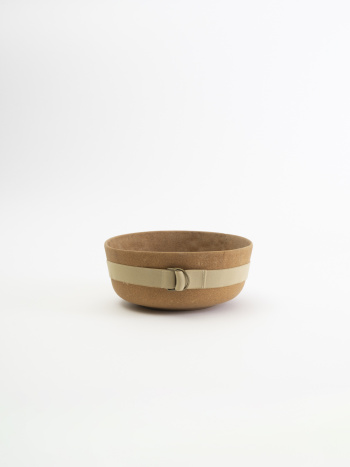
Designed in 2010 by Formafantasma, the Autarchy collection imagines a community capable of producing both food and objects locally from simple resources. Presented as a domestic installation combining a table, tools and vessels, it evokes the mill, the drying rack, the oven and the gestures of rural traditions.
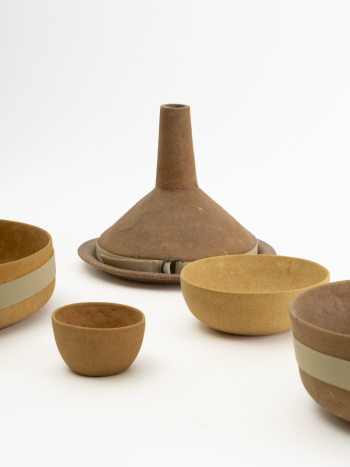
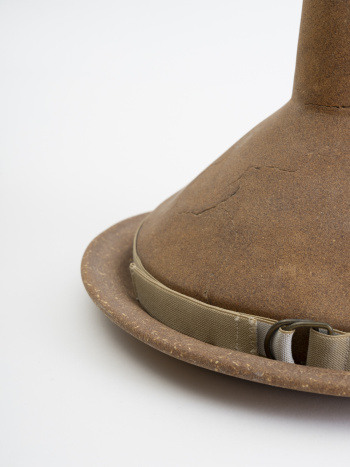
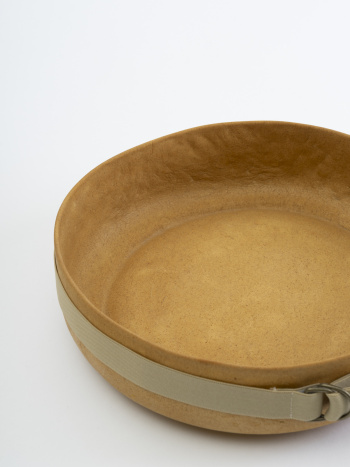
The pieces are made from a biological paste composed mainly of flour, agricultural waste and natural limestone. Moulded and then air-dried or dried at low temperature, they require no conventional ceramic firing. Their colours are obtained from vegetables, roots and spices transformed into natural dyes. The matt, granular surfaces retain traces of the making process, bringing the production of an object close to that of bread.
The value of Autarchy lies in its experimental character, the fragility of its materials and the coherence of its reflection on self-sufficiency and resources. Difficult to reproduce identically, these objects have the status of prototypes. Ensembles are held in the collections of the Mint Museum and the Stedelijk Museum Amsterdam.
Formafantasma
Formafantasma is a design studio founded by Andrea Trimarchi and Simone Farresin, recognized for a practice at the intersection of design, research, and ecology. Since its creation, the duo has developed a critical approach to design, exploring the relationships between culture, environment, materials, and production systems. Their early collections, notably Autarchy and Botanica, have marked the recent history of contemporary design through their ability to question industrial models and our relationship with natural resources. Presented in 2010, Autarchy explores the use of organic materials derived from renewable resources, while Botanica (2011) offers a forward-looking reflection on the evolution of plastic materials and their relationship with the plant world. Through an experimental and committed approach, Formafantasma develops a body of work in which the object becomes a tool for research and reflection on contemporary issues. Their creations are now included in the collections of the world’s leading institutions dedicated to art and design.
Our selection Home
Designed in 2010 by Formafantasma, the Autarchy collection imagines a community capable of producing both food and objects locally from simple resources. Presented as a domestic installation combining a table, tools and vessels, it evokes the mill, the drying rack, the oven and the gestures of rural traditions.
The pieces are made from a biological paste composed mainly of flour, agricultural waste and natural limestone. Moulded and then air-dried or dried at low temperature, they require no conventional ceramic firing. Their colours are obtained from vegetables, roots and spices transformed into natural dyes. The matt, granular surfaces retain traces of the making process, bringing the production of an object close to that of bread.
The value of Autarchy lies in its experimental character, the fragility of its materials and the coherence of its reflection on self-sufficiency and resources. Difficult to reproduce identically, these objects have the status of prototypes. Ensembles are held in the collections of the Mint Museum and the Stedelijk Museum Amsterdam.