Publisher/Manufacturer : Habitat
Production period : 2000's
Circa : 2001
Country of production : Italy
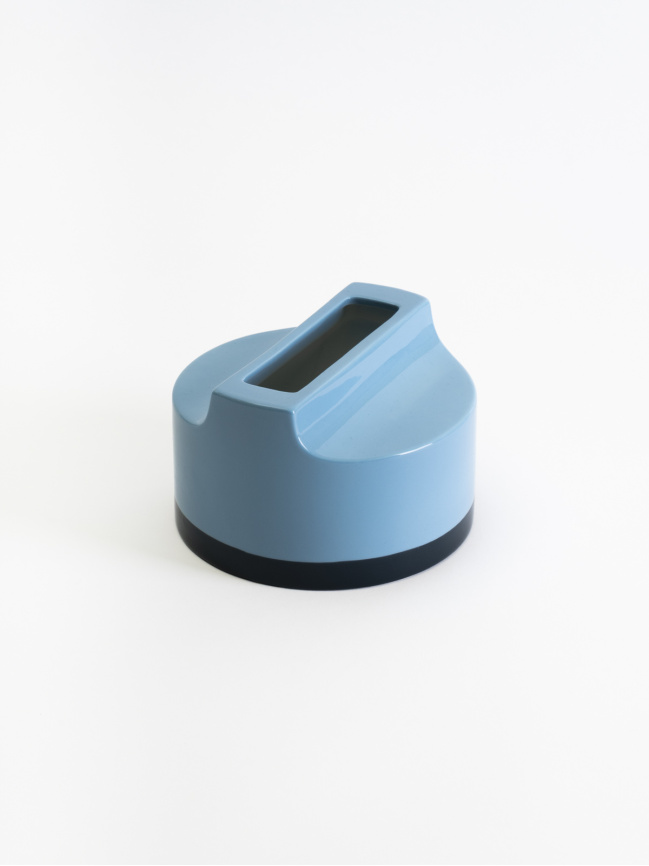
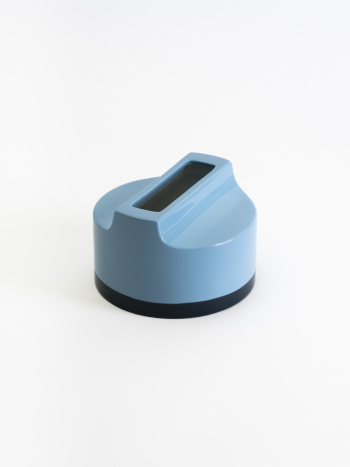
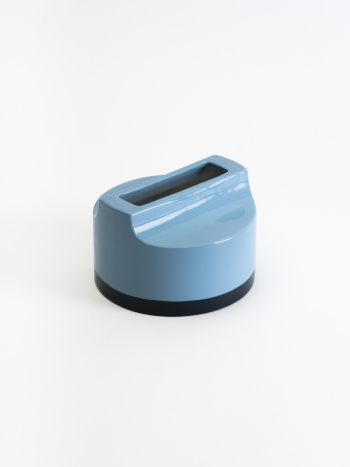
Materials : Slip-cast earthenware, glazed pale blue with a dark blue border; glossy finish.
Dimensions : 11 x 17 x 11 cm
COL ET 01
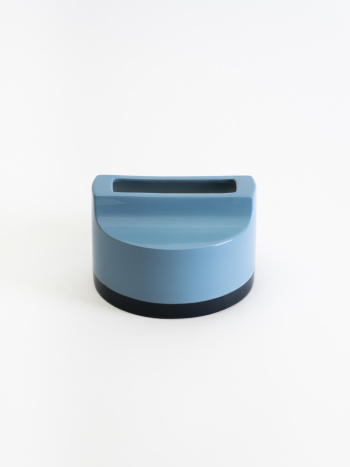
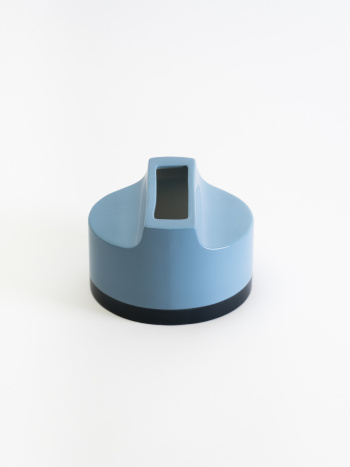
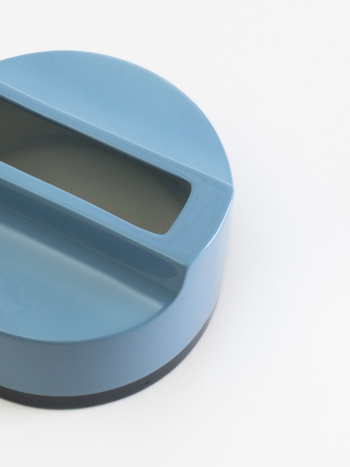
Published by Habitat in 2000, the Whistle Vase, or Fischietto, revisits a form first conceived by Ettore Sottsass in the early 1960s. Its slightly flattened cylindrical body terminates in a rectangular opening preceded by a curved indentation recalling the mouthpiece of a whistle. Through this geometric, archaic and playful silhouette, Sottsass transforms an everyday vessel into an almost symbolic presence.
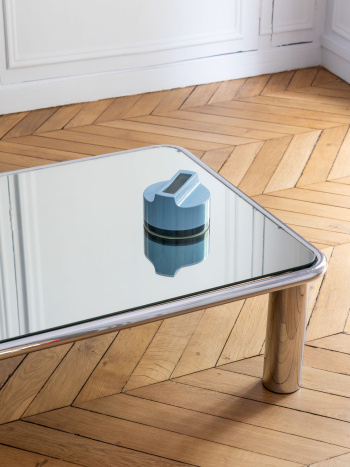
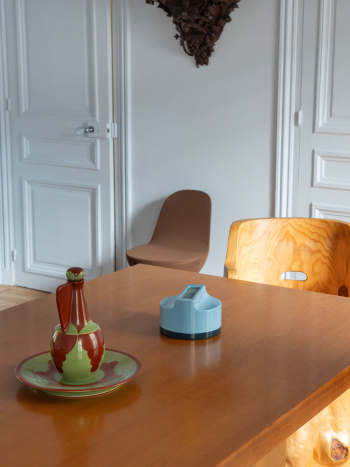
The vase is made from slip-cast earthenware: liquid clay is poured into a mould, dried and fired before receiving a glossy glaze. The pale blue body contrasts with a dark blue band around the base, emphasising the construction of the volume. Produced by Habitat in two sizes for a limited period, the model is now sought after. Its rarity results from the brevity of its production.
Ettore Sottsass
Ettore Sottsass is one of the most influential figures in twentieth-century Italian design. An architect, designer, and artist, he developed a profoundly experimental body of work that challenged the boundaries between art, object, and architecture. From the 1950s onward, he explored the expressive possibilities of ceramics, using color, form, and material as means of questioning the symbolic function of objects. His vases and ceramic pieces reflect a free and poetic approach, in which the domestic object becomes a medium for expression, inquiry, and reflection. Through his ceramic creations, he asserted a vision of design that moved beyond mere functionality, favoring emotion, narrative, and the ability of objects to create a sensitive relationship with the user. As the founder of the Memphis group, Sottsass profoundly transformed the conception of contemporary design, leaving behind a major body of work preserved in the world’s most important international collections.
Our selection Home
Published by Habitat in 2000, the Whistle Vase, or Fischietto, revisits a form first conceived by Ettore Sottsass in the early 1960s. Its slightly flattened cylindrical body terminates in a rectangular opening preceded by a curved indentation recalling the mouthpiece of a whistle. Through this geometric, archaic and playful silhouette, Sottsass transforms an everyday vessel into an almost symbolic presence.
The vase is made from slip-cast earthenware: liquid clay is poured into a mould, dried and fired before receiving a glossy glaze. The pale blue body contrasts with a dark blue band around the base, emphasising the construction of the volume. Produced by Habitat in two sizes for a limited period, the model is now sought after. Its rarity results from the brevity of its production.