Publisher/Manufacturer : Cassina
Production period : 1980's
Circa : 1917
Country of production : Italy
Special features : Numbered
Materials : 280 x 106 x 74 cm
COL FLW 01
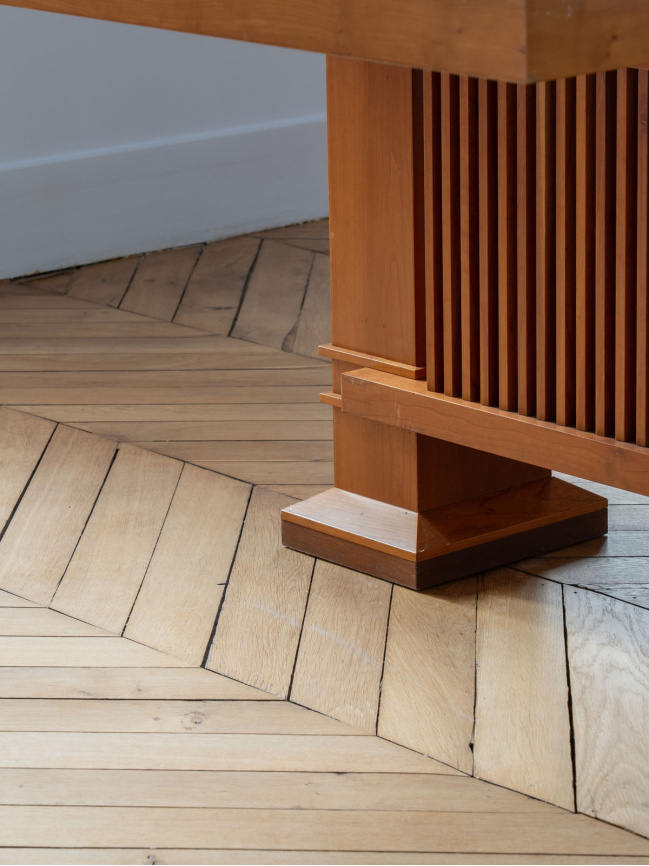
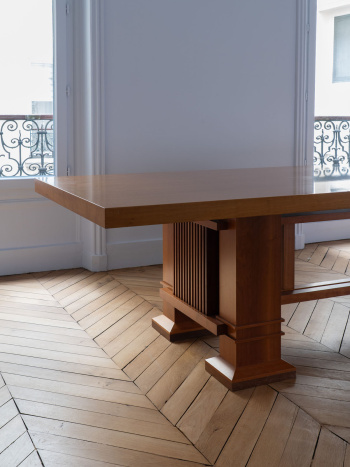
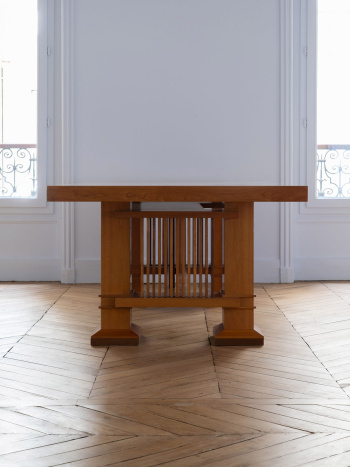
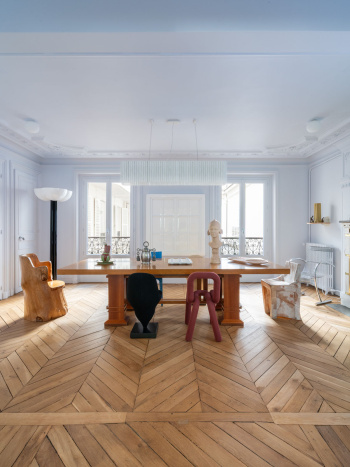
Designed in 1917 by Frank Lloyd Wright for the home of Henry J. and Elsie Allen in Wichita, the Allen 605 table translates the architectural principles of the Prairie School into furniture. Its long rectangular top, emphasised by an orthogonal structure of crosspieces, substantial legs and slender vertical slats, creates a monumental sense of horizontality while introducing a subtle interplay of solids and voids.
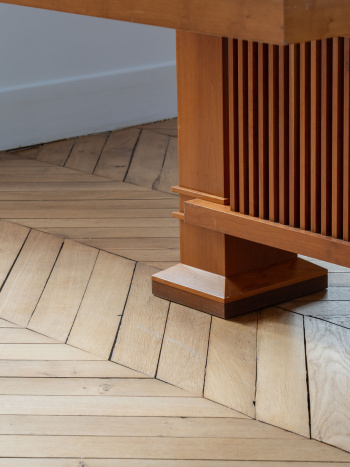
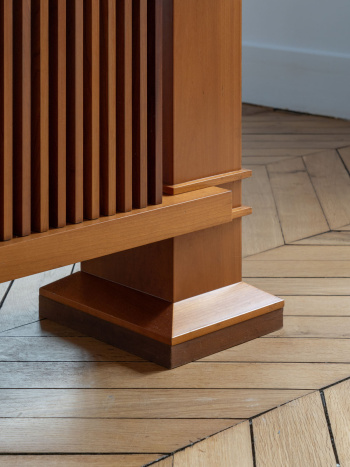
Published by Cassina as part of the I Maestri collection, this walnut version combines an American walnut-veneered top with solid and laminated wood structural elements. The precision of the joinery, the regular rhythm of the slats and the transparent finish highlight both the grain of the wood and the rigour of the composition.
Early and numbered examples are particularly sought after. The historic model remains closely associated with the Allen House, now a house museum, which preserves an important collection of furniture designed by Wright for the building.
Frank Lloyd Wright
Frank Lloyd Wright is one of the most influential figures in twentieth-century modern architecture. A proponent of an organic approach to living, he developed a holistic vision of design in which architecture, furniture, decorative arts, and the surrounding environment form a coherent whole. From the beginning of his career, he designed the furniture for his projects himself, considering furnishings as a natural extension of architectural space. His creations, characterized by the geometric purity of their lines, the quality of their materials, and a constant attention to use, rank among the major contributions to American design. Through iconic pieces created for his houses and buildings, he established a lasting formal language that would influence several generations of designers. His work, preserved in the world’s leading international collections, reflects a foundational vision in which the object fully participates in the architectural experience.
Our selection Home
Designed in 1917 by Frank Lloyd Wright for the home of Henry J. and Elsie Allen in Wichita, the Allen 605 table translates the architectural principles of the Prairie School into furniture. Its long rectangular top, emphasised by an orthogonal structure of crosspieces, substantial legs and slender vertical slats, creates a monumental sense of horizontality while introducing a subtle interplay of solids and voids.
Published by Cassina as part of the I Maestri collection, this walnut version combines an American walnut-veneered top with solid and laminated wood structural elements. The precision of the joinery, the regular rhythm of the slats and the transparent finish highlight both the grain of the wood and the rigour of the composition.
Early and numbered examples are particularly sought after. The historic model remains closely associated with the Allen House, now a house museum, which preserves an important collection of furniture designed by Wright for the building.